Wednesday, January 31, 2018

The Hobbit - 01/25/2018

2932 E. Chapman Ave
Orange, CA 92869
(714) 997-1972

Located in a re-purposed 3 story house, The Hobbit was founded by Howard and Beverly Philippi who took over the space in 1972 and built one of the longest lived fine dining institutions in Orange County. As one might expect the name is a nod to Tolkien, as the founders were enamored of the leisurely lifestyle of the fictional race and hoped to capture a little of their joie de vivre in their restaurant.

Today their son Michael Philippi runs the restaurant and though the menu has evolved somewhat with the time, the format has remained largely unchanged. The restaurant offers a single 7-course menu that begins in the wine cellar before diners move onto their own tables where they are served seafood, a light meat, and a salad. A short intermission follows giving diners a chance to stretch their legs or hobnob with the chef before returning for sorbet, the main entrée, and dessert.

Canapes
The evening officially kicks off at 7:00PM with champagne and hors d'oeuvres in the wine cellar. This provides guests the opportunity to casually peruse the 1,000+ bottle wine cellar and select bottles for the meal all while enjoying the plethora of small bites and a glass bubbly. Personally my favorites were the steak tartare and the puff pastry stuffed with cheese, gruyere I think, and some sort of cured meat. For those who might be overwhelmed by their choices, the sommelier, Amy Cody, and her team are there to provide recommendations.


2012 Marcassin, Marcassin Vineyard, Sonoma Coast, Chardonnay
2004 Heitz, Martha's Vineyard, Napa Valley, Cabernet Sauvignon
In addition to having one of the most one of Orange County's finest cellars, The Hobbit's prices are among the most reasonable, with a number of bottles at or below retail. We opted to pick up a bottle of 2004 Heitz to go along with a 2012 Marcassin from my own cellar. The Marcassin was elegant and nuanced, with honeysuckle, soft white flowers, loads of citrus, stone fruit, and surprisingly little oak; a fresh and ethereal vintage that paired nicely with the Salmon, salad, and Halibut. The Heitz couldn't have been more different, with a deep nose redolent of dark fruit, earth, mint, and eucalyptus. The herbal elements bring an element of balance that keeps the wine from being too brooding.


Herb Roasted Salmon - Israeli Couscous, Blood Orange Beurre Blanc
I've never been a huge fan of cooked salmon particularly when the fish is cooked through. Still the dense texture worked well with the buttery heft of the sauce. The Beurre Blanc was definitely the highlight of the dish simultaneously providing buttery richness and a contrasting citrus twang.


Petite Veal Osso Bucco - Po Valley Black Rice, Veal Jus
The meal got heavy in a hurry with tender round of braised veal. The preparation features a classic base of rich meaty jus with moderating elements of dense forbidden rice and a smattering of fresh mirepoix vegetables that added both succulent highlights and a hint of bitterness. Sucking on the hollow bone yields a small morsel of heady marrow to finish the dish.


Arugula & Endive Salad - Fuyu Persimmons, Candied Pecans, Crispy Prosciutto
I thought it was odd to serve salad after the osso bucco, but timing aside, the salad was quite enjoyable. The bitterness of the greens is deftly kept in check by the persimmons and candied pecans. The prosciutto is fried to an intense crisp that provides a potent salinity to dress the rest of the dish.


Following the salad, we took a 20 minute intermission. The guests were asked to retire to one of the upstairs rooms or the patio as the staff reset the tables for the entrée

Sorbet - Orange
When we came back to the table, we were presented with a dollop of sorbet made from fresh oranges. The cool mild citrus was a nice pick me up 2.5 hours into the meal.


Filet of Beef en Crôute
The basic entrée was reminiscent of a Beef Wellington. Though I typically find filet bland, I thought this cut had enough meaty flavor particularly when coupled with the mushrooms. The thin ring of dough has a heady butteriness that compliments the simple richness of the beef. The roasted potatoes, carrots, and radishes were classic accompaniments, but it was the almost jellied slab of squash or yam, loaded with maple sweetness, that completed the dish.


Fresh Pacific Halibut - Baby Bok Choy, New Year's Black Eyed Peas, Ginger Sauce
The alternative main was a perfectly cooked filet of halibut. Texturally everything was spot on, but the flavor was a bit flat and one dimensional as the ginger sauce was unfortunately muted. A splash of citrus or some spice might have worked better..


Almond Cake - Housemade Vanilla Bean Ice Cream, Fresh Strawberry
The dessert was a moderately dense almond cake. The flavor and texture was reminiscent of a butter cake with a whiff of almond. With the addition of vanilla and tangy strawberry, the dessert is basically an extra bold strawberry short cake.


The "contemporary continental" menu is perhaps a bit dated but the spot-on execution made the meal solidly enjoyable. At 4 hours for 7 courses, the pacing was a bit slow for my liking though I'm glad I finally made it out to The Hobbit for a dining experience from a bygone era.

With a single prix fixe menu, strict dress code, and flourishes like the wine cellar tour and intermission, The Hobbit offers an intimate dining experience that feels out of place in an era of gastropubs and share plates. Still I can see how the experience could appeal to the Orange County dining crowd. I mean, the place is still going strong after 46 years and regularly books up weeks in advance; so they must be doing something right.


Read more.

Saturday, December 16, 2017

Sushi Tanaka - 10/21/2017

3977 Cochran St, Ste D
Simi Valley, CA 93063
(805) 306-1374

Having been to most of LA's top sushi restaurants I found myself looking for something new. So when I heard about Sushi Tanaka I grit my teeth and made the 75 mile drive to a tiny spot located in a nondescript strip mall in Simi Valley. I wasn't sure what to expect though I was comforted by the fact that the Chef's resume included stints at both Nobu and Shunji in LA.

Sushi Tanaka is run by Chef Sei Tanaka and his wife who serves as the spot's only front-of-house staff. The restaurant is smaller than most neighborhood sushi spots with only a tiny 7 seat bar and a handful of tables running along one side of the restaurant.

When I made the reservation, I had requested a more nigiri-heavy meal and Chef Tanaka was happy to accommodate us offering us 1 plated appetizer and 18 pieces of nigiri for $100 rather than the standard 3 plated appetizers and 13 pieces of nigiri. For those looking to splurge there is an "unlimited" option that includes delicacies like Japanese beef, live lobsters, and hairy crab.

Arugula Salad - Madai Sashimi, Heart of Palm, Charcoal Salt, Sudachi, Persimmon
The meal got started with a delicate salad served with a side of Madai snapper dressed with sudachi and persimmon. The fish is a nice textural contrast to the heart of palm but the sweet-sour contrast from the fruit highlight the flavor profile along with a nutty bitterness from the greens.


Kuromutsu - Black Bluefish
The pink flesh was nicely charred with a blowtorch and chunk of binchotan charcoal which gave it a pleasing smokiness. The fish itself is moderately oily though there was an unexpectedly sinewy layer running just under the skin that gave the fish a pleasantly complex texture.


Aji - Spanish Mackerel
This was a pleasantly minimalist rendition of Spanish Mackerel. The single strip of ginger imparts a surprisingly intense spiciness that combines with the fish's natural oil to create a slighly sweet flavor.


Sanma - Pacific Saury
Most chefs tend to grill Sanma over charcoal which results in a dry tough texture but Chef Tanaka's opted for a raw preparation that still highlight's the fish's natural oiliness but with a sublime, quiveringly tender mouthfeel.


Hotate - Scallop
This was a quintessential Hokkaido Scallop topped with a salty-spicy mix of charcoal salt and yuzu kocho to compliment the sweetness of the flesh.


Mirugai - Geoduck
Sai-san followed up the scallop with a sliver of Geoduck though other than both being bivalves, the two pieces of shellfish were as different as could be. The Mirugai offers a much denser and firmer texture to the point of being crunchy along with a strong salinity.


Tako - Octopus
Cooked Tako isn't usually my thing but this version was smoked then charred giving it a tender texture; the addition of a slightly sweet sauce gives the meat a satisfying barbecue-like flavor.


Kanpachi - Amberjack
The Amberjack was on the lean side; with less oil the fish had a firmer texture and milder flavor than the typical cut of Kanpachi.


Shima Aji - Striped Jack
I really appreciated having the Shima Aji follow the Kanpachi. The pink striped alabaster color and snappy texture were reminiscent of the preceding fish but the flavor had a bit more oily warmth.


Hon Maguro - Bluefin Tuna
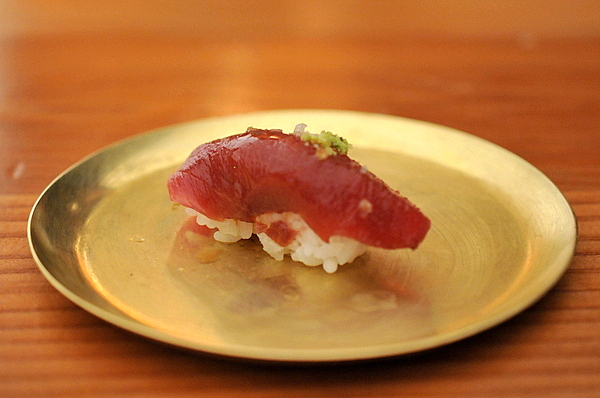
Everything about this piece screamed quintessential Akami, from the soft even texture to the mild clean flavor though I could have done with a bit more wasabi.


Toro - Fatty Tuna
This was one of the best pieces of toro that I've had in a long while. The trick was to go with a wider surface area but thinner cut that coats the tongue in an ephemeral blanket of heady fish oil.


Kinmedai - Golden Eye Snapper
Truffle oil and daikon aren't two ingredients I would expect to find together but their combination on the kinmedai was nothing short of majestic funky yet savory with a bit of char to boot.


Kinki - Rockfish
Kinki has a viscous supple texture reminiscent of raw octopus that was quite memorable while the quick sear added depth to the normally mild white fish.


Sake Zuke - Kelp-marinated Salmon
Sei-san's seared kelp marinated Salmon breathes new life into the tired ordinary salmon that graces every sushi newbie's plate. The fish takes on loads more depth and character from the undertones of brine from the kelp to the nuanced smoke laced with buttery sweetness. Hands down the best salmon nigiri I've ever tasted.


Ikura - Salmon Roe
Chef Tanaka throws a curveball on the classic Ikura with a dose of truffle oil. I found the flavor a bit heavy-handed and the texture of the roe was a little flabby to boot.


Uni - Sea Urchin
After a rare miss with the Ikura, the meal got back on track with a perfect piece of sweet Santa Barbara Uni.


Kamasu - Barracuda
The Barracuda made for a a deftly composed one-bit course blending a burst of tangy pungent plum, fragrant shiso, and a pleasing deep smoke-laced oily twang.


Amaebi - Sweet Shrimp
The Amaebi is served feathered with tiny cuts to accentuate the shrimp's natural crunch. A deft brush of soy sauce accentuates the shellfish's intrinsic sweetness.


Akamutsu - Red Bluefish
This was one of the softer cuts of fish on the night with an almost creamy mouthfeel that throws the crunch of the black salt in sharp relief.


Kawahagi - Thread-sail Filefish
This is one of Chef Sei's signature dishes, pairing a lean cut of Filefish with a lobe of sweet creamy liver. The former provides a silky supple textural base while the latter brings a seductive mouth-coating richness.


Unagi - Freshwater Eel
Chef Tanaka eschews the traditional sticky sweet Nitsume sauce and prefers to serve the unagi au natural. I much preferred this rendition which still has the tender fatty texture and and simple charred flavor.


Yakitoro & Uni - Seared Fatty Tuna and Sea Urchin
We opted to add a couple extras to our meal. First up was a seared Toro topped with delicate lobes of uni. The warm oily fish and cool pillows of creamy uni result in a shudderingly decadent pairing that verges on sensory overload.


Seared Scallop - Uni, Caviar, Truffle
Our second supplement was actually something that is included as one of the plated appetizers in the regular $100 omakase. The seared scallop comes topped with more uni and caviar with a slice of truffle to complete the dish. Not quite as overtly rich as the previous dish, there was still plenty to love about this luxurious morsel.


Tamago - Egg
Of course the meal ended with a piece of Tamago. I was glad to see Chef Tanaka serves the sweet sponge cake-like variant.


I have to say Sushi Tanaka exceeded my every expectation. The fish quality is comparable to any of LA's top spots but at half the price. Chef Tanaka also nails the rice temperature and consistency perhaps a legacy of his training at Shunji. Pacing can be a bit slow as Chef Tanaka not only handles all the sushi preparation, but does all the cooking normally handled by back of the house. When the restaurant is busy, this can result in a bit of lag between pieces, though the pace picked up towards the end of the meal so if this bothers you I'd recommend a later reservation. Bottom line, if only this restaurant weren't so damn far it would undoubtedly be my go to spot for sushi.


Read more.

Saturday, November 25, 2017

Otoko - 09/30/2017

1603 S Congress Ave
Austin, TX 78704
(512) 920-6405

I wouldn't have expected to find a modern Kaiseki restaurant in Austin much less one that requires diners to buy tickets in advance, but a quick look at Austin's dining scene shows a surprising plethora of Japanese restaurants. This is largely thanks to the outsize influence Uchi has had on the city since it opened in 2003. Uchi gained national renown for its marriage of traditional Japanese technique with contemporary multi-cultural flare. As a result of this reputation, many of Austin's young up and coming chefs have done a stint at either Uchi or its sibling Uchiko. This includes Paul Qui, arguably the most famous Uchi/Uchiko alum and Top Chef Season 9 winner to boot.
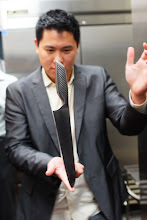
While Otoko might trade on Paul Qui's name, in reality his former senpai (senior) Yoshi Okai is the one who runs the show. Okai, a Kyoto native grew up helping out at his family's catering business and after a brief stop in California to study landscape architecture, wound up at Uchi where he started to learn about sushi. The heavily inked Okai looks more like a dokyun rock-star than a sushi chef(Okai is actually the lead singer in a punk band called the Kodiaks), but his easy smile and high-energy bring a comfortable casualness to the intimate dining space where he works his magic.

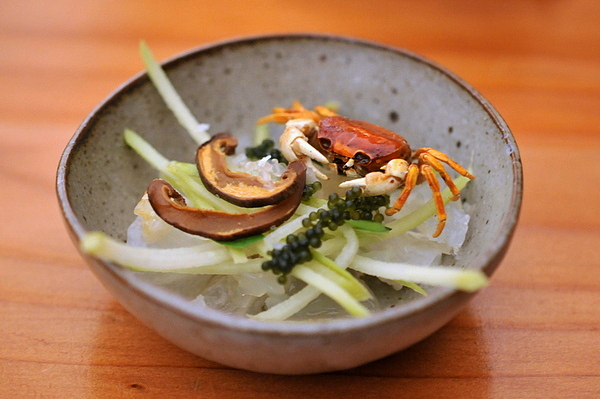
SAKIZUKE: Kurage - chayote squash, sawagani kikurage, fried shiitake, finger lime, umi budo
Vazart Coquart Blanc de Blancs Champagne, France NV
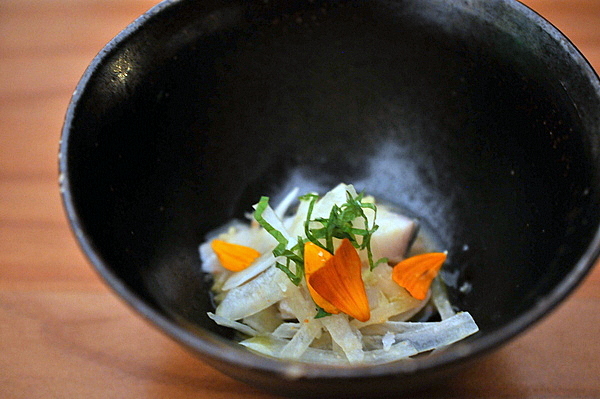
The meal opened with a salad of chayote and fennel on a bed of jellyfish that was a study in crunchiness. On the palate the dish was a bit jarring, mixing licorice with the funky earth of the mushrooms and a bright citrus pop from the lime in a combination that never quite jelled.


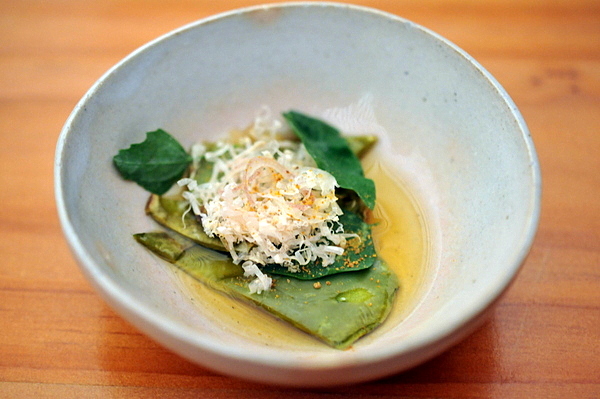
ZENSAI: Nopales - itogaki, myoga, uni bottarga, ayu fish sauce
Vazart Coquart Blanc de Blancs Champagne, France NV
The second appetizer was a much heavier salad of Nopales in a multifaceted fish sauce that was salty and pungent with a whiff of BBQ-esque smoke on the finish. Though I've never been particularly fond of Nopales, I appreciated the Southwestern flair they brought to the dish.


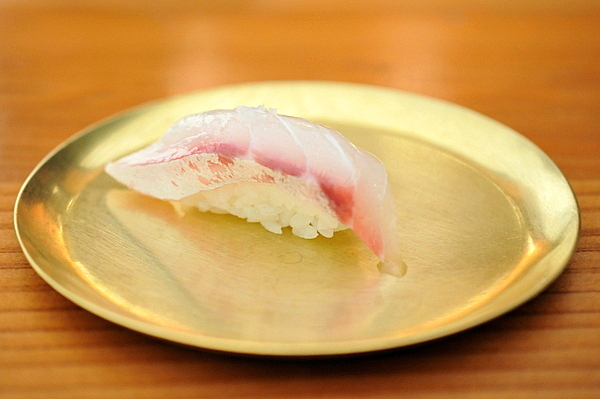
SUSHI: White Sea Bass - irizake
Villa Wolf Riesling Dry GG Forster Pechstein, Pfalz, Germany 2014
Unlike traditional Kaiseki, the meal immediately veers from appetizers to nigiri. Our first piece of sushi was a sliver of firmly textured sea bass. The fish was seasoned with, an old-school "soy" sauce of rice wine, shaved bonito flakes, and pickled plums popular during the Edo period that added a gentle persistent fishiness to the traditionally mild bass.


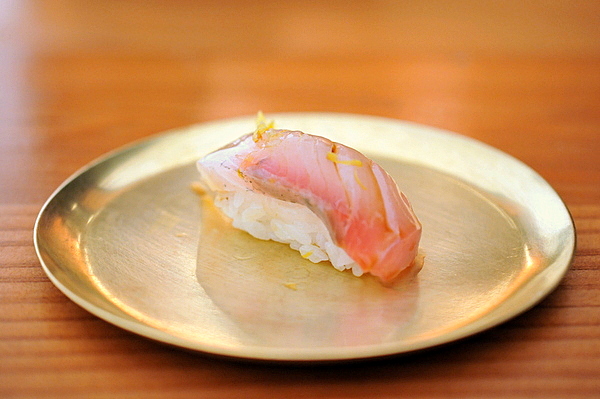
SUSHI: Kanpachi - lemon zest
Villa Wolf Riesling Dry GG Forster Pechstein, Pfalz, Germany 2014
Next up was a stellar example of Amberjack. The mild oily flavor is tinged with a sweet butteriness that played beautifully with the citrus-y zip of the fresh zest.


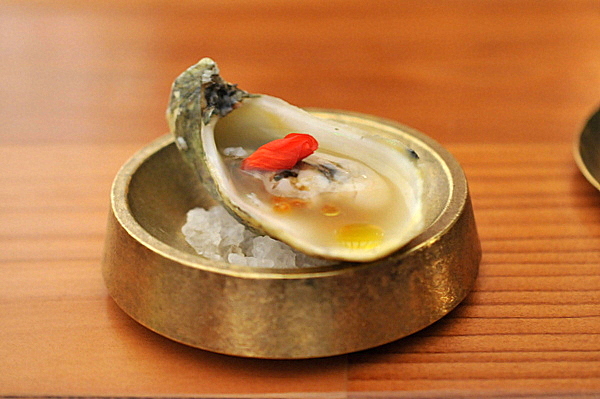
SUSHI: Shigoku Oyster - yuzu ponzu, smoked steelhead roe
Villa Wolf Riesling Dry GG Forster Pechstein, Pfalz, Germany 2014
Shigokus have always been one of my favorite oysters on account of their creamy body and delicate melon-y character. Unfortunately the flavor of the oyster was overpowered by the one-two punch of salt from the ponzu and smoked roe.

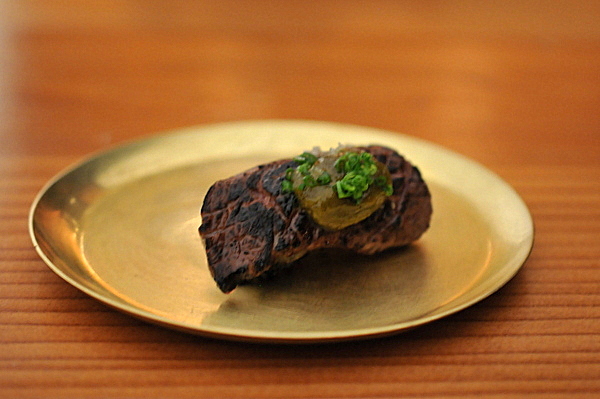
SUSHI: Mishima Wagyu - negimiso, chives
Villa Wolf Riesling Dry GG Forster Pechstein, Pfalz, Germany 2014
I am more used to seeing a light sear on Wagyu but Chef Okai spent a long time lovingly torching each slice over a bed of binchotan. The extra time worked wonders with the skirt steak by highlighting the cut's intrinsic beefiness while imparting a wonderful smokiness.

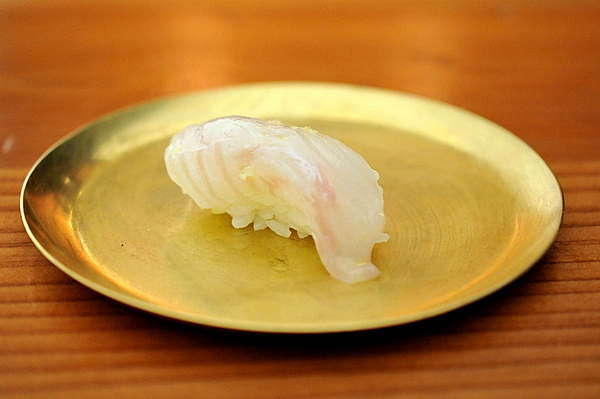
SUSHI: Hirame - yuzu
Villa Wolf Riesling Dry GG Forster Pechstein, Pfalz, Germany 2014
After a quartet of inventive nigiri, Chef Okai opted for a classic but effective pairing of salt and yuzu on the halibut.


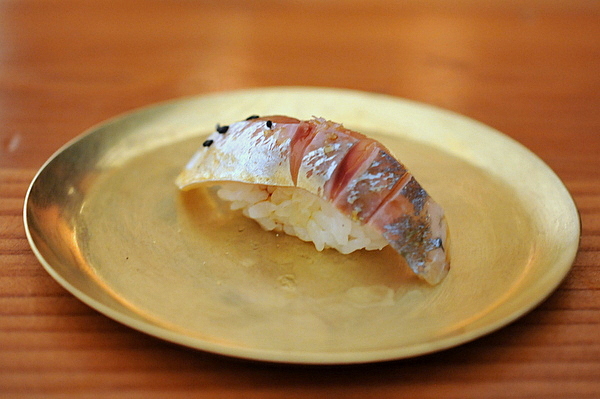
SUSHI: Aji - black sesame
Villa Wolf Riesling Dry GG Forster Pechstein, Pfalz, Germany 2014
Chef Okai served up a supple of minimally dressed Aji with just a dash of salt and black sesame. The result was a pointed clean oiliness finshed with a hint of nuttiness.


SUSHI: Hon Maguro - wasabi
Villa Wolf Riesling Dry GG Forster Pechstein, Pfalz, Germany 2014
Okai has somehow procured Kindai tuna, a more sustainably sourced form of the prized Bluefin. Okai smartly sticks with the classics here and the familiar flavor of wasabi and soy are somehow elevated when paired with the slightly rich twang of the Bluefin. Add to that the smooth even mouthfeel of the fish and you have the makings of a top notch Akami.


SUSHI: Hokkaido Uni - fresh wasabi, white sturgeon caviar
Domaine Jean-Max Roger Rosé, Pinot Noir Sancerre Loire Valley, France 2016
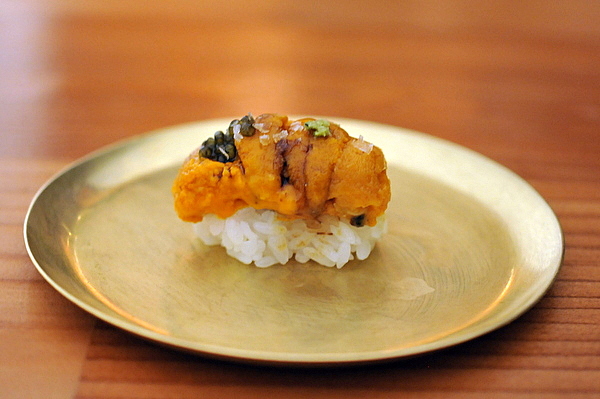
The lush creamy roe oozed rich salinity with a creeping sweetness and while the caviar fit nicely, the salt was just a hair too strong.


SUSHI: Madai - sakura koji, matcha oil
Domaine Jean-Max Roger Rosé, Pinot Noir Sancerre Loire Valley, France 2016
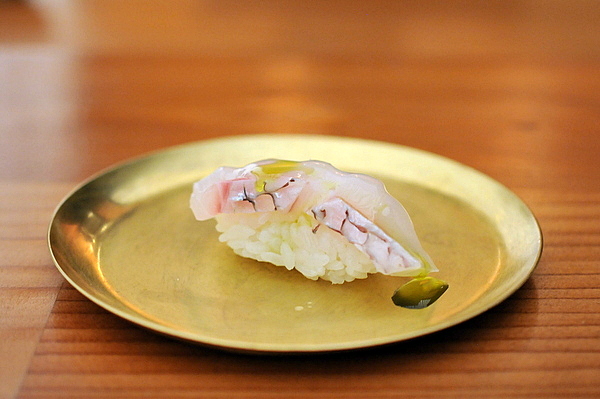
The final nigiri of the night was an alabaster cut of madai drizzled with a verdant matcha-infused oil. The delicate flavor of the snapper was a good base for the subtle nuttiness of the oil and floral notes of the cherry blossom.


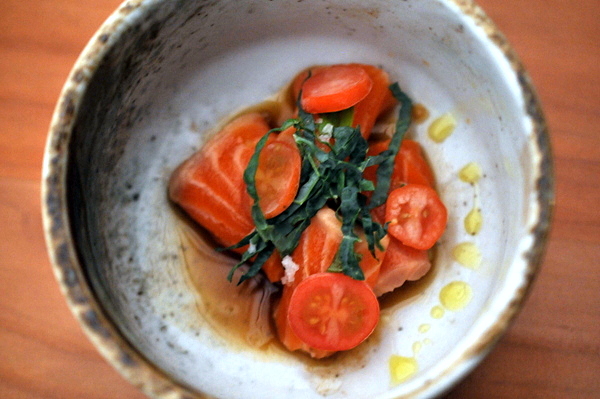
MUKOUZUKE: Ocean Trout - ponzu, dino kale, lemon basil, frozen tomatoes
Domaine Jean-Max Roger Rosé, Pinot Noir Sancerre Loire Valley, France 2016
Moving on from the nigiri, we were presented with a summery composed sashimi presentation. The tangy ponzu and high fat content of the trout worked together nicely with the fresh basil and icy rush of the tomatoes.


MUKOUZUKE: Black Cod - fresh onion, ginger, sumiso, shiso, dried shimeji
Domaine Jean-Max Roger Rosé, Pinot Noir Sancerre Loire Valley, France 2016
The ever popular miso Black Cod has always been a bit heavy handed in my opinion but I quite enjoyed Okai-san's more complex presentation. He deftly tempers the buttery sweetness with a soft herbal fragrance and hint of earthy savor.


YAKIMONO: Eryngii Mushroom - purslane, sudachi juice, morokyu, fried glass noodles
Château Thivin Gamay Bruilly, Beaujolais Burgundy, France 2015
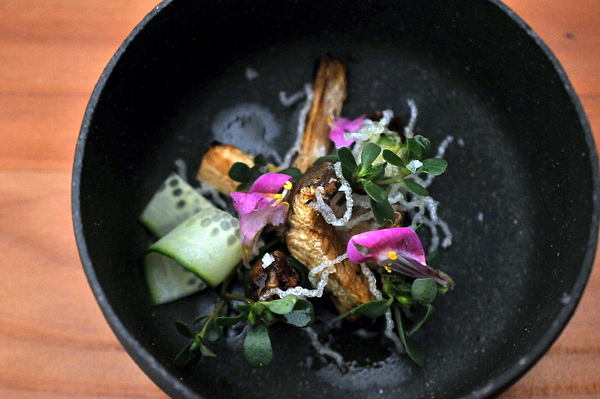
This course veered from flavor to flavor in rapid-fire fashion, sweet and nutty one minute, then bright acid the next. Sadly the only flavor that was missing was the mushroom though they did provide a pleasing slick squid-like texture.


YAKIMONO: Binchotan - hamachi, smoked tamari sauce
Château Thivin Gamay Bruilly, Beaujolais Burgundy, France 2015
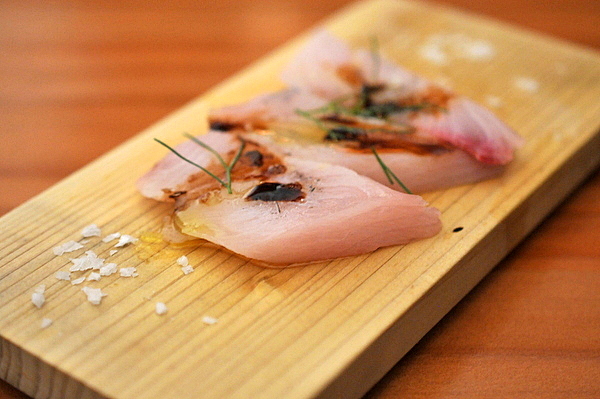
Fittingly the headline of this course is the charcoal and indeed it is all about the Binchotan. Chef Okai plates and dresses the thick slabs of yellowtail, pulls out a piece of red hot charcoal from the grill, and taps each piece of fish sending up wisps of smoke that fill the room with a woody smoke tinged with umami from the fish oils. Technically the fish itself is enjoyable, but largely a blunt sledgehammer of smoke though the fennel and olive oil help matters somewhat.


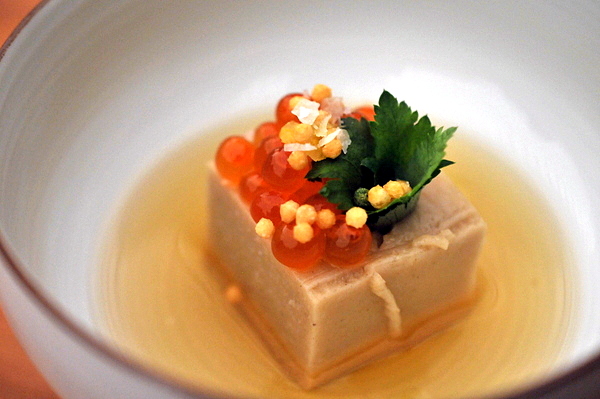
MUSHIMONO: Gomadofu - bubu arare, ikura, yuzu zest, black truffle oil
Domain Louis Bovard Chasselas, "Mèdinette" Dèzaley Grand Cru, Vaud, Switzerland 2013
I've been warming to sesame tofu of late. The neutral nutty block is a perfect vehicle for whatever flavors the chef sees fit to pair, in this case the truffle oil and yuzu. The bubu arare really pops here like a savory cereal dippin dots.


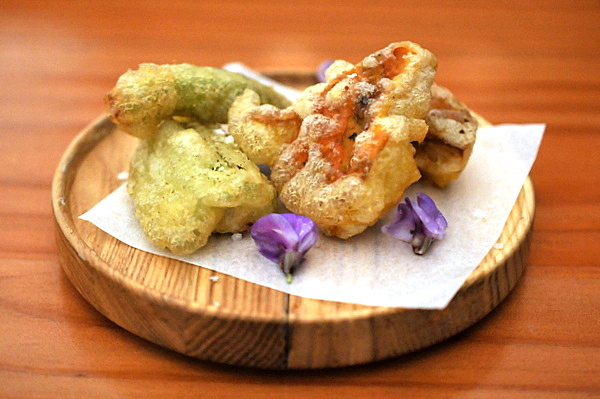
AGEMONO: Tempura - okra, sansho
AGEMONO: Tempura - ovoli mushroom, sal de gusano
Domain Louis Bovard Chasselas, "Mèdinette" Dèzaley Grand Cru, Vaud, Switzerland 2013
Next we were presented with two types of vegetable tempura, the first was a Japanese-influenced take on fried okra. The Italian Ovoli mushroom was definitely the more memorable of the duo, with a deep earthiness tinged with sweet yeastiness of the freshly fried batter.


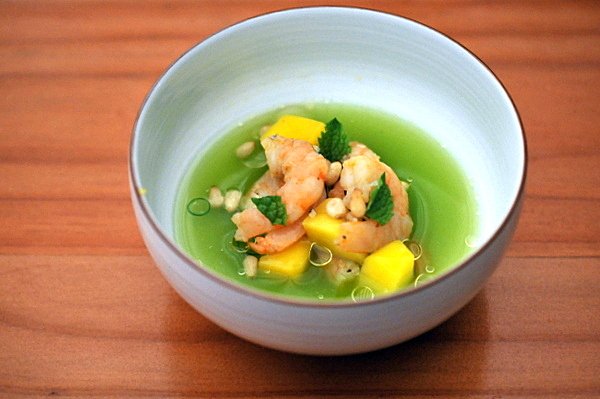
SHIRUMONO: Kyuri Gazpacho - koebi, mango, Thai chili, mint, pine nut
Maximin Grünhäser Riesling Auslese Herrenberg, Mosel, Germany 2011
The cool cucumber gazpacho was a nice follow-up to the hefty tempura. The verdant broth is unabashedly tangy with layers of heat and sweetness to keep the dish from being too astringent. The shrimp was a touch overdone and in my opinion superfluous to the cohesiveness of the dish.


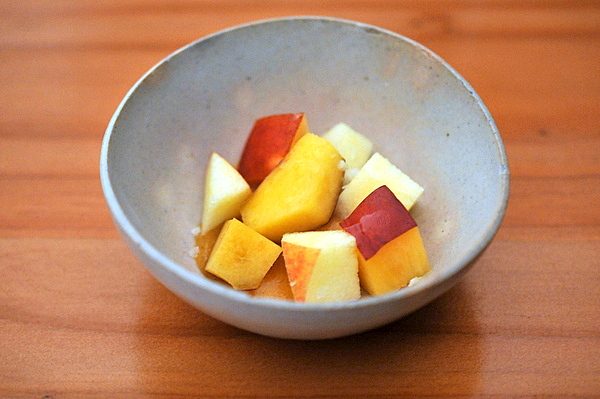
MIZUMONO: Persimmon - nectarine, apple
Maximin Grünhäser Riesling Auslese Herrenberg, Mosel, Germany 2011
The simple fruit intermezzo was especially effective with the sweetness of the fruit standing in sharp relief to the acidity of the Gazpacho.


KANMI: Natsu no Hibiki - (harmony of summer)
Maximin Grünhäser Riesling Auslese Herrenberg, Mosel, Germany 2011
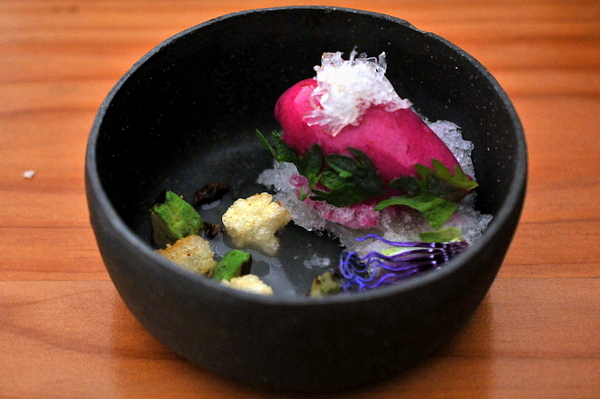
The final dessert was as much a feast for the eyes as for the palate. The prickly pear ice cream rests atop a bed of frozen sushi rice milk with the latter providing a creamy even temper to the unabashed florid flavor of the cacti. The bits of avocado and mochi tempura bring a hint of savor and substance that round out the frozen elements in the bowl.


From the moment that you step into the dining room at Otoko you are in for a treat well worth the $150 ticket price. While not all the dishes worked for me, I certainly appreciated the irreverent creativity that went into them. It is that combination of ambition and high-octane punk-rock flair that landed Okai a spot on Food & Wine's list of best new chefs for 2017.
Read more.